
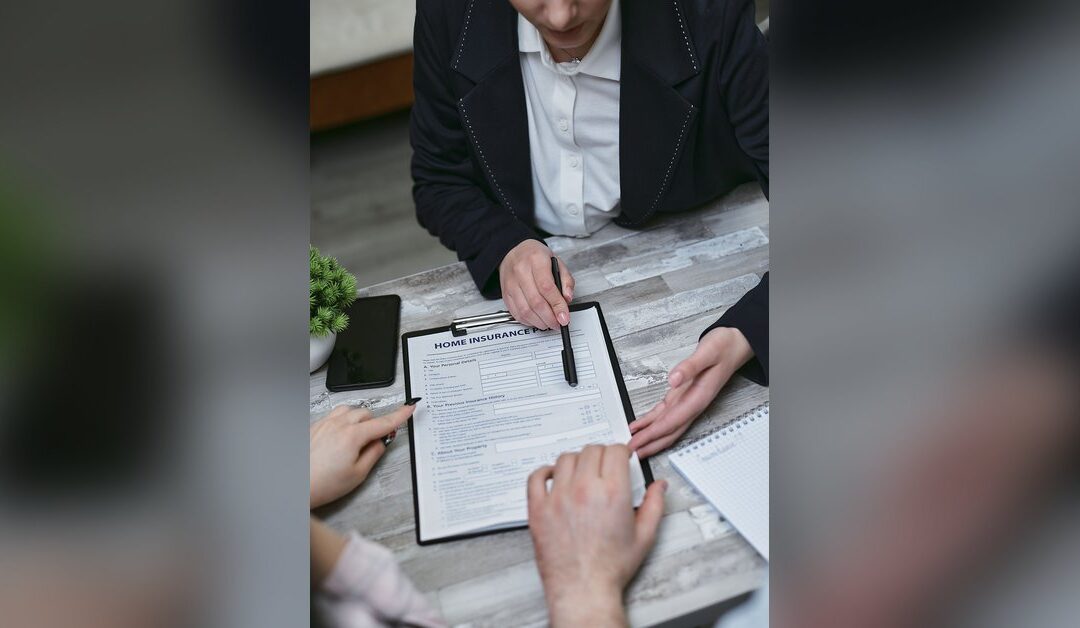
Quick answer: a public adjuster is licensed by the State of Florida to handle an insurance claim for you, the policyholder. You pay nothing up front. The fee is a percentage of what your claim pays, and Florida law puts a limit on that percentage. If your claim pays nothing, you owe nothing.
Written by Edgar Velazquez, Florida licensed public adjuster (#P140117) and founder of Monarch Claims Consultants in Miami.
Most people hear the word “adjuster” for the first time at the worst possible moment, right after a storm, a fire, or a leak has damaged their home. And few people know there is more than one kind of adjuster. This page explains, in plain words, what a public adjuster is, what the license requires, and exactly how the pay works under Florida law.
THERE ARE THREE TYPES OF ADJUSTERS. ONLY ONE WORKS FOR YOU
When you file a property claim, your insurance company assigns an adjuster to review the damage. That person is usually a company adjuster, meaning an employee of the insurance company. Sometimes it is an independent adjuster instead, which is a person the insurance company hires from outside to do the same job. In both cases, they were hired by the insurance company, so the insurance company is who they report to.
A public adjuster is the third type, and the only one who represents you. Section 626.854(1) of Florida law defines a public adjuster as a person who, for a fee, prepares and files an insurance claim for the policyholder, and negotiates the settlement of that claim on the policyholder’s behalf. In simple terms: out of everyone involved in your claim, the public adjuster is the one licensed to be on your side.
WHAT A PUBLIC ADJUSTER ACTUALLY DOES FOR YOU
The job is much more than filling out forms. A good public adjusting firm does five things on every claim:
- Reads your full policy. Not the one page summary. The whole contract, to find everything that applies to your loss.
- Inspects and documents the damage. This step can make or break a claim. A trained adjuster looks for damage that is not visible to the untrained eye, and there are right ways to document a loss that give the claim its best possible outcome. That is why who does the inspection matters so much.
- Writes the estimate. A detailed, line by line repair estimate. At Monarch we write every estimate ourselves, using the same professional estimating software the insurance industry uses. That way the numbers on your side are just as strong as the numbers on theirs.
- Negotiates. This is where the documentation and the estimate pay off. We negotiate for a settlement that reflects all the damage the property actually has, not just the part that was easy to see.
- Follows up. We keep steady pressure on the file so the insurance company acts on time. Florida law gives insurance companies deadlines, and we track every one of them until your claim is resolved.
WHAT IT TAKES TO GET THE LICENSE
In Florida, nobody can just call themselves a public adjuster. Under section 626.865 of Florida law, the state requires the training and instruction in claims adjusting that the law demands, passing the state licensing exam, and posting a $50,000 bond that stays active for a full year after the license ends. There is also an experience requirement: before getting the license, a person must first work in a supervised adjusting role for six months. For most future public adjusters, that role is the licensed public adjuster apprentice. The license comes from the Florida Department of Financial Services, and you can look up any adjuster’s license for free on the DFS website. Always do that before you sign with anyone. Ours is at the bottom of this page.
WANT TO KNOW WHAT YOUR CLAIM IS REALLY WORTH?
Tell us what happened. A licensed adjuster will review your claim with you, and the review costs you nothing.
Or call 1 (888) DAMAGE-0
HOW THE PAY WORKS: YOU ONLY PAY IF YOUR CLAIM PAYS
Florida law ties a public adjuster’s pay to results. Under section 626.854(11)(b), everything a public adjuster is paid for a claim must stay within a set percentage of what the insurance company pays on that claim. That is why there is no upfront cost and no hourly bill. And if the insurance company pays nothing, a percentage of nothing is nothing, so you owe nothing. Think about what that means: the only way your public adjuster earns more is by getting more of your covered damage paid. Your recovery and the adjuster’s pay rise and fall together, because the law wrote it that way.
THE FEE LIMITS FLORIDA LAW SETS
Section 626.854(11)(b) of Florida law sets maximum fees. No contract is allowed to go above these numbers:
- 20% is the normal limit. The fee can never be more than 20% of what the insurance company pays on your claim.
- 10% after a declared emergency. If the Governor declares a state of emergency after a catastrophe, such as a hurricane, the limit drops to 10% for claims from that event. The 10% limit applies to claims made during the first year after the declaration. After that first year, the normal 20% limit applies again.
- 1% in one special case. If the insurance company pays the full policy limit for a coverage, or agrees in writing to pay it, within 14 days after the date of loss (or within 10 days after the public adjuster contract is signed, whichever is later), the fee on that money is capped at 1%.
- 0% on money that was already coming. If the insurance company paid, or agreed in writing to pay, before you ever signed with the public adjuster, no fee can be charged on that money.
The law adds three more protections in the same section. Your deductible does not count: no fee can ever be charged on it. Additional living expenses, meaning the money the policy pays for you to live somewhere else during repairs, do not count either, unless you sign a separate agreement that says so in the exact words the law requires. And the percentage cannot be raised just because your claim ends up in court. The law even says that any trick designed to get around these limits is itself a violation.
WHAT IF THE INSURANCE COMPANY ALREADY PAID, BUT NOT ENOUGH?
This happens a lot. The insurance company pays something, the payment does not cover the repairs, and the homeowner brings in a public adjuster afterward. Section 626.854(11)(a) is very clear on this: the fee can only be charged on the new money the adjuster recovers after the contract is signed. It can never be charged on what the insurance company had already paid for that loss, and it cannot be more than 20% of the new recovery. If someone quotes you a fee on the whole claim, including money you already received, that is against the law. We wrote a full guide on short payments here: my insurance paid less than the repairs cost, what now?
READ THE CONTRACT BEFORE YOU SIGN. LOOK FOR THESE FOUR THINGS
Florida also has rules for the contract itself, in sections 626.854(7) and 626.8796 of Florida law. Check these before signing with anyone:
- The percentage, in big print. The law requires the fee percentage to appear in large bold letters (at least 18 point type) right before the line where you sign. If you have to hunt for the number, do not sign.
- The fraud notice. The law requires a clear insurance fraud warning in that same large bold print. If it is missing, that tells you something about the company.
- Your right to cancel. On any claim, you can cancel the contract with no penalty within 10 days after signing it. If your claim comes from an event under a declared state of emergency, you get more time: 30 days after the date of loss or 10 days after signing, whichever gives you more. And separately, if the adjuster does not send the insurance company a written estimate within 60 days of the contract, for reasons within the adjuster’s control, you can end the agreement.
- The license number. Look it up on the DFS website before you rely on it.
THE FEE RULES TELL YOU EVERYTHING ABOUT THIS PROFESSION
Read those limits one more time and notice what they all have in common: every single one protects the policyholder. Capped percentages. No fee on your deductible. No fee on money you already had. Nothing owed if the claim recovers nothing. Florida built the rules so that a public adjuster can only do well by doing right by you. That is the profession we chose at Monarch, and we practice it every day for homeowners and business owners across Florida. When you are ready, we would be glad to show you what your claim looks like with a licensed adjuster on your side.
QUESTIONS WE GET ASKED THE MOST
Who actually pays the public adjuster?
You do, out of the claim money, and only after it arrives. Florida law sets the fee as a percentage of what the claim pays. Nothing is due at the start.
What happens to the fee if the claim pays nothing?
There is nothing to take a percentage of, so there is no fee. The fee is calculated only on claim payments or settlements actually paid to you.
Can the fee be charged on my deductible?
No. Florida law says insurance claim payments do not include the policy deductible and that public adjuster compensation may not be based on the deductible portion of a claim.
Can I hire a public adjuster after my claim has already been paid?
Yes. That is a reopened or supplemental claim. In that situation the fee can only be based on the additional money obtained after you sign, never on what the insurance company already paid you before.
How soon do I get a written estimate, and can I change my mind?
The adjuster must give you a written, itemized estimate within 60 days of signing. You can cancel within 10 days of signing for any reason. If the claim comes from an event under a state of emergency declared by the Governor, you get 30 days from the date of loss or 10 days from signing, whichever is longer.
HAVE A CLAIM? LET’S LOOK AT IT TOGETHER
Every message is read by a licensed public adjuster, not a call center.
1 (888) DAMAGE-0 | (305) 972-2034 (Direct)
Before you hire anyone: read how to choose a public adjuster in Florida, with the red flags and the questions worth asking first.
After the company’s adjuster visits: read whether you have to accept the home insurance adjuster’s estimate, and what a public adjuster changes.
This article is general information about Florida law as of its publication date. It is not legal advice, and reading it does not create an adjuster and client relationship. Laws change and every policy is different. Confirm current law or speak with a licensed professional about your specific claim.
Edgar Velazquez is a Florida-licensed public adjuster (License #P140117). Monarch Claims Consultants, Inc., Miami, Florida.
THIS IS A SOLICITATION FOR BUSINESS. IF YOU HAVE HAD A CLAIM FOR AN INSURED PROPERTY LOSS OR DAMAGE AND YOU ARE SATISFIED WITH THE PAYMENT BY YOUR INSURER, YOU MAY DISREGARD THIS ADVERTISEMENT.